
CFTC gives prediction markets 30 days to lift geofencing despite court orders
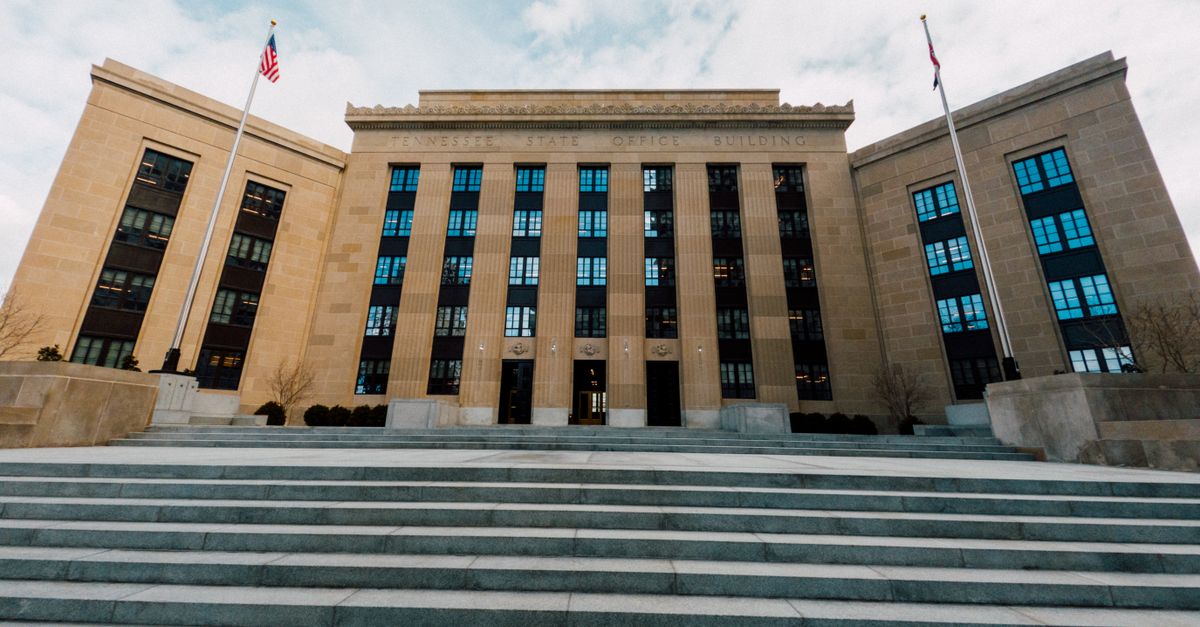
Registered prediction markets have 30 days to lift domestic geofencing under guidance the Commodity Futures Trading Commission issued on Nov. 5, including in states where courts have ordered those blocks to stay. The document lands the day after a federal judge in San Francisco barred Kalshi's sports contracts from California tribal lands, and it leaves operators holding two incompatible instructions.
What the CFTC told exchanges
The interpretative guidance says registered designated contract markets (DCMs) may not restrict access based on where a trader is located when that conflicts with the Commodity Exchange Act's impartial access requirements. Exchanges have 30 days to remove any domestic restriction that violates those requirements, or to explain in writing to the Division of Market Oversight why they cannot. The guidance also requires exchanges to make sure partner intermediaries comply.
"Derivatives markets must operate on a uniform basis at a national scale in order to achieve the purposes set out in the Commodity Exchange Act," Chairman Michael Selig said in the release. "Geographic access restrictions are inconsistent with those purposes and the Act's impartial access requirements."
SBC Americas reported that the guidance gives no direction on what a DCM should do when impartial access conflicts with a court order, and sets out no penalties for non-compliance. The commission said it would weigh written explanations case by case.
Court orders already in force
Rulings in Michigan, Nevada and Washington have included geoblocking requirements. Kalshi, Polymarket and Crypto.com have taken sports event contracts offline in states such as Michigan as a result of court directives.
In August, a unanimous three-judge panel of the Ninth Circuit wrote that Kalshi's repeated argument that it cannot satisfy both Nevada geofencing orders and federal uniform access requirements at the same time is "a false, all-or-nothing proposition." On Wednesday the same panel denied Kalshi's request for rehearing and rehearing en banc.
The California injunction came from U.S. District Judge Jacqueline Scott Corley in Blue Lake Rancheria v. Kalshi on Nov. 4. Her one-page order bars Kalshi from offering "any sports contracts" on the plaintiff tribes' Indian lands, covering contracts that "facially involve, relate to, or reference" baseball, basketball, boxing, chess, eSports, football, golf, hockey, motorsports, pickleball, soccer, tennis, wrestling or UFC. The tribes must deliver maps of their land boundaries to Kalshi by Nov. 13, and the company has 21 days to report to the court on how it complied.
The injunction follows a September Ninth Circuit holding on the same case. "Kalshi may reshuffle the cards, but it cannot change the hand: Its sports event contracts are class III gaming," Judge M. Margaret McKeown wrote for the panel.
Sen. Adam Schiff (D-Calif.) called the guidance "the CFTC's most egregious attempt yet to undermine state law, the Tribes, and now, the courts." In the same post on X, he said the agency and "its rogue chairman" appeared to be encouraging platforms to offer gambling products "in contempt of these court orders."
December 7 at the Supreme Court
The circuits are split. The Third Circuit held in April that the Commodity Exchange Act likely preempts New Jersey's attempt to regulate Kalshi. New Jersey petitioned the Supreme Court on Sept. 2, and petitions from Robinhood and Crypto.com followed. The Court extended Kalshi's response deadline to Dec. 7.
A coalition of 130 federally recognized tribes and 15 tribal organizations filed an amicus brief urging the justices to take the New Jersey case. Attorneys general from 38 states and Washington, D.C., the NFL and the American Gaming Association filed briefs backing New Jersey.
Other tribal challenges are pending, including the Ho-Chunk Nation case in Wisconsin, where U.S. District Judge William Conley denied an injunction in May after finding no irreparable harm, and a New Mexico suit brought by four tribes.
What operators say
DraftKings CEO Jason Robins played down the guidance on the company's third-quarter call on Friday. "As far as the CFTC thing, I would not make anything of that," he told analysts. "There is a process for demonstrating why you can only operate in certain geographies." DraftKings does not offer sports event contracts in states where it holds a sports wagering license.
Kalshi head of enforcement Robert DeNault said in July that the CFTC's Michigan order put the company in "an impossible position." Several operators have pulled sports and other contracts out of Utah since the state brought felony charges against Kalshi. Kalshi and Polymarket did not respond to SBC Americas' request for comment before publication.
The 30-day window opened on Nov. 5. Kalshi's response to the New Jersey petitions is due Dec. 7.
chat Comments
Sign in to leave a comment
Sign in with GoogleNo comments yet — be the first to share your thoughts!